

Carpooling for Students: Affordable Travel Options in IndiaCarpooling for Students: Affordable Travel Options in India
Discover how carpooling can help students manage intercity travel in India. Learn about shared travel costs, planning, safety tips, and how RideFizz can help students find suitable shared rides.
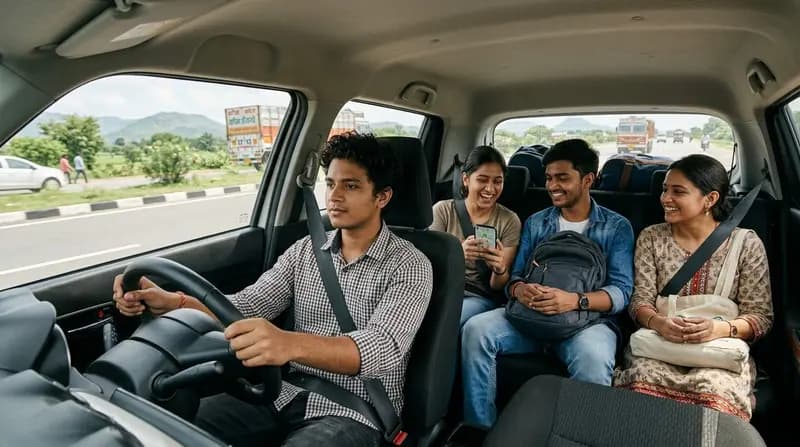
Students often need to travel between their college, hometown, internship location, or nearby city while managing a limited travel budget. Carpooling for students can provide a practical way to share a journey with people travelling in the same direction and divide certain travel-related expenses.
Across India, students frequently travel between cities such as Delhi and Jaipur, Mumbai and Pune, Bengaluru and Mysuru, or Chandigarh and Delhi. Depending on the route and timing, carpooling can be considered alongside buses, trains, shared taxis, and other transportation options.
With proper planning, students can find suitable shared rides, understand the expected cost, coordinate pickup and drop-off points, and prepare for a smoother journey.
What Is Carpooling for Students?
Carpooling is a shared travel arrangement where multiple people travel together in the same vehicle, generally along a similar route. Instead of travelling alone, available seats can be shared with other passengers.
For students, carpooling may be useful when travelling:
From home to college or university
Between nearby cities
During semester breaks
For internships and training programs
For entrance examinations
During holidays
Between college campuses and hometowns
The cost and arrangement can vary depending on the distance, route, vehicle, number of passengers, and agreement between the people travelling.
Why Are Students Considering Carpooling in India?
Students often have to manage several expenses, including tuition, accommodation, food, study materials, and daily transportation. Sharing a journey can help distribute some travel expenses among passengers.
Shared Travel Costs
When multiple passengers travel together, certain journey-related expenses can be shared according to the agreed arrangement.
Depending on the trip, these expenses may include:
Fuel
Tolls
Parking, where applicable
Other mutually agreed travel expenses
Students should understand the cost-sharing arrangement clearly before confirming a ride.
Convenient Intercity Travel
Buses and trains generally operate according to fixed schedules and designated routes. A carpool may offer different pickup or drop-off arrangements depending on the particular ride.
This can be useful when a student's destination is not directly connected to a convenient bus or train route.
For example, a student may need to reach a location outside the main transport corridor. If a suitable shared ride is available, the pickup and drop-off arrangement may be more convenient.
Useful for Weekend and Holiday Travel
Students living away from their hometowns often travel during weekends, semester breaks, festivals, and holidays.
For example, a student studying in Jaipur may travel to Delhi during a holiday, while a student in Pune may regularly travel to Mumbai.
A shared ride can provide another transportation option when the route, timing, and available seats match the student's requirements.
How Students Can Plan a Carpool Trip
Finding a shared ride is only one part of the process. Proper planning can make coordination easier for both passengers and drivers.
1. Decide Your Route
Start by identifying the basic details of your journey:
Current location
Destination
Preferred travel date
Preferred departure time
Possible pickup locations
Preferred drop-off location
For longer journeys, also consider whether the route passes through major cities or towns where you may need to stop.
Having these details ready makes it easier to compare available rides.
2. Compare Available Travel Options
Carpooling does not have to be the only transportation option.
Students can compare it with:
Bus travel
Train travel
Shared taxis
Private vehicles
Other local transportation
Consider the complete travel cost, journey time, convenience, luggage requirements, and schedule.
A low initial ride contribution may not always represent the total cost of the journey. Local transportation to the pickup point and from the drop-off location can also add to the overall expense.
3. Check the Ride Details
Before joining a carpool, carefully review the available ride information.
Important details may include:
Driver information
Vehicle information
Starting point
Destination
Departure time
Available seats
Expected cost
Planned route, where provided
If any important information is unclear, clarify it before confirming the journey.
4. Confirm Pickup and Drop-Off Points
The exact meeting location is an important part of shared travel.
Instead of simply agreeing on a city name, confirm a specific and easily identifiable pickup point that works for both the driver and passenger.
For example, rather than saying "pickup in Jaipur," agree on a clearly identified location and approximate meeting time.
The same approach should be followed for the drop-off point.
5. Discuss Luggage Before Travelling
Students travelling home may carry backpacks, suitcases, books, laptops, and other belongings.
Available luggage space depends on the vehicle and the number of passengers. Therefore, discuss luggage requirements in advance, particularly when planning a long-distance carpool.
This can help prevent misunderstandings on the day of travel.
How Much Does Student Carpooling Cost?
There is no single fixed price for every student carpool journey.
The expected contribution can depend on several factors, including:
Distance
Fuel consumption
Toll charges
Vehicle type
Number of passengers
Route
Other agreed expenses
Before confirming a ride, students should understand how much they are expected to contribute and what the contribution covers.
It is also useful to compare the complete travel cost with buses, trains, and other alternatives.
For example, a student should consider not only the carpool contribution but also the cost of reaching the pickup point and travelling from the final drop-off location to the actual destination.
Carpooling vs Bus and Train for Students
Different transportation options can suit different journeys.
| Factor | Carpooling | Bus | Train |
|---|---|---|---|
| Route flexibility | Depends on the ride | Usually fixed | Usually fixed |
| Departure time | Depends on the driver/ride | Scheduled | Scheduled |
| Cost | Shared according to arrangement | Ticket-based | Ticket-based |
| Pickup location | Can vary | Designated stops | Stations |
| Luggage | Depends on vehicle space | Subject to operator rules | Subject to railway rules |
| Privacy | Shared vehicle | Shared | Shared |
| Availability | Depends on matching route/date | Based on schedule | Based on schedule |
There is no single transportation option that works for every student.
The appropriate choice depends on the route, budget, timing, luggage requirements, and individual travel needs.
Student Carpooling Safety Tips
Cost and convenience are important considerations, but students should also pay attention to basic travel safety.
Verify Ride Information
Before starting the trip, check the available driver, vehicle, route, pickup location, destination, and timing information.
Make sure the details you have match the ride you are joining.
Share Your Travel Details
Tell a trusted family member, friend, roommate, or another person you trust about your journey.
Useful details to share include:
Driver information
Vehicle details
Pickup location
Destination
Expected arrival time
This provides someone you trust with basic information about your travel plans.
Keep Your Phone Charged
A charged phone can be useful for communication, navigation, and contacting someone if plans change.
For longer journeys, carrying a power bank can also be practical.
Meet at a Suitable Location
Choose a clear and appropriate pickup point and confirm the location before departure.
Clear communication can reduce confusion, particularly in busy areas such as railway stations, bus terminals, markets, or major road intersections.
Keep Personal Belongings Secure
Students should keep important belongings such as phones, wallets, identification documents, laptops, and other valuables with them.
Avoid leaving important personal items unattended.
Communicate Changes Early
If you are running late or need to change the agreed pickup arrangement, inform the other person as early as possible.
Drivers should also communicate significant delays or route changes so passengers can adjust their plans.
What Students Should Check Before Confirming a Carpool
A simple checklist can help students avoid last-minute problems.
Before confirming a carpool, check:
Is the route suitable?
Is the travel date correct?
Does the departure time work?
Is the pickup point convenient?
Is the drop-off location suitable?
Is the cost clearly understood?
Is there enough luggage space?
Are the ride and vehicle details available?
Have important travel details been shared with someone you trust?
Taking a few minutes to review these details can make shared travel coordination easier.
How RideFizz Can Help Students Find Shared Rides
RideFizz is a ride-sharing and carpooling platform designed around shared travel. For students, a platform such as RideFizz can provide a way to look for shared rides that match their travel requirements instead of arranging every part of a journey through informal conversations.
Students can review available ride information and identify journeys that may match their route and timing. They can then coordinate the relevant travel details before the trip.
The basic idea is straightforward: when people are travelling in a similar direction, sharing available seats can create another practical transportation option.
For students who regularly travel between their college city and hometown, carpooling can be considered alongside conventional public transportation.
Tips for Students Who Frequently Travel Between Cities
Students who travel regularly can make the process easier by planning around their academic and personal schedules.
Save Your Common Routes
Keep track of routes you frequently travel, such as:
College to hometown
Hostel to nearby city
University to airport
College to internship location
Knowing your common routes can make it easier to identify potentially suitable shared rides.
Plan Around Your Academic Schedule
Try to plan travel around:
Semester breaks
Examination dates
Internship schedules
Long weekends
University holidays
Planning earlier can give you more time to compare available travel options.
Keep Your Travel Budget Realistic
Do not consider only the carpool contribution when planning your travel budget.
Also account for:
Transportation to the pickup point
Food during the journey
Local transportation after reaching the destination
Other travel-related expenses
Looking at the complete journey cost provides a more realistic picture of what you will spend.
Is Carpooling a Good Option for Every Student?
Carpooling can be useful in some situations, but it may not suit every journey.
Students should consider:
Distance
Travel timing
Available rides
Budget
Luggage
Personal preferences
Alternative transportation options
For very short journeys, local public transportation may be more convenient. For certain long-distance routes, trains or buses may offer suitable schedules.
Carpooling becomes another option when the route, timing, cost arrangement, and travel requirements align.
Frequently Asked Questions
Is carpooling affordable for students in India?
Carpooling can help share travel-related expenses among passengers, but the actual contribution depends on factors such as the route, distance, vehicle, and agreed cost arrangement.
How can students find a carpool in India?
Students can use ride-sharing and carpooling platforms such as RideFizz to look for shared rides that match their travel requirements, route, and timing.
What should students check before joining a carpool?
Students should check the route, travel date, departure time, pickup and drop-off locations, driver and vehicle information, luggage arrangements, and expected cost before confirming a ride.
Can students use carpooling for intercity travel?
Yes. Carpooling can be considered for intercity journeys when an available ride matches the student's route and schedule.
How should carpool travel costs be shared?
The cost-sharing arrangement should be discussed clearly before the journey. Depending on the trip, it may account for fuel, tolls, parking, or other mutually agreed travel expenses.
Is carpooling better than travelling by bus or train?
The choice depends on the student's route, budget, schedule, luggage, and convenience requirements. Carpooling, buses, and trains have different characteristics, so students can compare the options for their particular journey.
Final Thoughts
For students travelling between cities in India, carpooling can be a practical shared-travel option when the route, timing, cost, and other arrangements work for everyone involved.
The key is to plan the journey carefully. Confirm the route and pickup point, understand the cost, check the ride details, discuss luggage requirements, communicate clearly, and follow basic travel-safety practices.
Whether you are travelling home for a holiday, heading to an internship, attending an entrance examination, or making a regular intercity journey, comparing carpooling with buses, trains, and other transportation options can help you select an arrangement that fits your particular trip.