

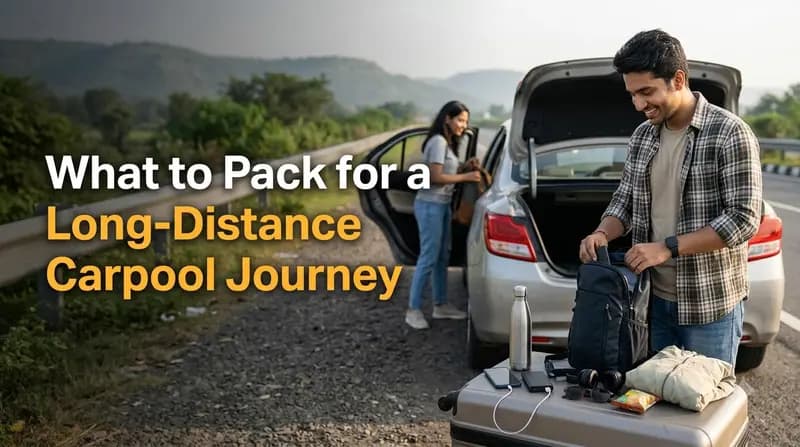
What to Pack for a Long-Distance Carpool Journey
Planning a long-distance carpool journey? Discover the essential documents, comfortable clothing, snacks, gadgets, and safety items to pack for a smooth and hassle-free trip. Follow this practical packing checklist from RideFizz and prepare for a more comfortable shared travel experience.
Long-distance carpooling is a practical way to travel between cities in India while sharing the journey with other passengers. Whether you are travelling from Jaipur to Delhi, visiting family in another city, or commuting for work, preparing your luggage in advance can make the trip more comfortable and organised.
Knowing what to pack for a long-distance carpool journey helps you avoid last-minute stress, keep important belongings within reach, and travel without carrying unnecessary items. Unlike travelling alone, carpooling involves sharing vehicle space, so it is important to pack efficiently and consider the comfort of fellow passengers.
With platforms such as RideFizz helping travellers explore shared travel options, planning ahead can make your journey easier from the moment you leave home. Here is a practical guide to the essentials you should carry, the items you can leave behind, and the packing tips that can help you enjoy a smoother road trip.
1. Carry Important Documents and Travel Essentials
Before packing clothes or snacks, organise the items you may need during the journey. Keeping essential documents and travel details accessible can save time at pickup points and during unexpected situations.
Your essential travel items should include:
Government-issued identification: Carry an appropriate ID if required for your booking or travel arrangements.
Booking confirmation: Keep your ride confirmation, pickup location, departure time, and drop-off details available on your phone.
Smartphone: Make sure your phone is fully charged before departure.
Charger and power bank: These help you stay connected throughout the trip.
Wallet and payment methods: Carry your preferred digital payment options and a small amount of emergency cash.
Important contact details: Save the driver's contact information and emergency numbers where you can access them easily.
It is also sensible to keep your booking information available offline or take a screenshot in case mobile internet connectivity becomes unreliable along the route.
2. Pack Comfortable Clothing and Personal Comfort Items
A long-distance journey can involve several hours of sitting, changing weather conditions, and different temperatures inside and outside the vehicle. Choosing comfortable clothing can make a noticeable difference.
What clothing should you carry?
Choose lightweight, breathable clothes suitable for the expected weather. Cotton T-shirts, comfortable trousers, and loose-fitting outfits are practical options for many Indian road journeys.
Consider packing the following:
A light jacket, cardigan, or shawl for air-conditioned vehicles.
Comfortable shoes or sandals that are easy to wear.
An extra pair of socks for longer journeys.
Sunglasses and a cap for sunny conditions.
A small travel pillow if you prefer additional neck support.
An eye mask or light blanket if you expect to rest during the journey.
Check the weather forecast for your destination before leaving. If you are travelling through areas with cooler temperatures or expecting an overnight journey, adjust your clothing accordingly.
Avoid packing several unnecessary outfit changes for a short trip. One spare set of clothes may be sufficient for many day-long journeys, depending on your plans.
3. Bring Water and Easy-to-Carry Snacks
Food and water are important carpool travel essentials, particularly when travelling between cities where refreshment stops may not happen exactly when you expect.
Carry a reusable water bottle and refill it before departure. For snacks, choose options that are easy to eat, produce minimal mess, and do not have strong smells.
Suitable choices include:
Nuts and dry fruits.
Plain biscuits or crackers.
Fresh fruit that is easy to eat without creating a mess.
Granola or cereal bars.
Small, neatly packed snacks suited to your dietary preferences.
If you have specific dietary requirements, carry food that meets your needs rather than relying entirely on roadside restaurants.
Remember to dispose of wrappers and other waste responsibly. Avoid leaving food crumbs, bottles, or packaging inside the vehicle.
Coordinate meal and refreshment stops with the driver. Do not assume that the vehicle will stop whenever you want. Discuss planned breaks in advance, particularly on longer routes, so everyone can manage their time and expectations.
4. Pack Health, Hygiene, and Personal Care Essentials
Travelling for several hours in a shared vehicle makes basic hygiene and personal care especially important. A small pouch containing everyday essentials is usually enough.
Include items such as:
Hand sanitiser.
Tissues and wet wipes.
A small towel or handkerchief.
Toothbrush and toothpaste for longer journeys.
Lip balm and moisturiser, depending on the weather.
Sunscreen if you expect prolonged sun exposure.
Personal medication, if required.
A small first-aid kit for basic personal needs.
If you are prone to motion sickness, consider preparing in advance by discussing suitable options with a healthcare professional or following advice you have already received. Keep any regularly used medication accessible and follow its instructions.
Avoid carrying unnecessary bottles or large personal-care containers. Travel-sized products can save space and make your bag easier to organise.
5. Carry the Right Gadgets and Entertainment
Smartphones are useful for checking trip details, communicating with the driver, navigating to pickup points, and staying in touch with family. However, relying on a single device without preparing for low battery or poor connectivity can create avoidable difficulties.
Your long-distance road trip packing list can include:
A fully charged smartphone.
A compatible charging cable.
A power bank.
Headphones or earphones.
Downloaded music, podcasts, or audiobooks.
Offline maps or saved directions.
An e-book or other reading material.
Do not assume the car will have a USB charging port, a compatible charger, or Wi-Fi. Confirm charging arrangements beforehand if you need them.
When using headphones, keep the volume at a reasonable level and remain aware of important announcements or conversations about pickup points and stops. If you are sitting in the front passenger seat, follow the driver's instructions and avoid distracting them.
Downloading entertainment and maps before departure can also help when mobile network coverage is inconsistent.
6. Keep Safety and Emergency Essentials Accessible
A little preparation can help you manage common travel disruptions without adding unnecessary bulk to your luggage.
Consider carrying:
Emergency contact numbers.
Your booking confirmation and driver contact details.
A small torch if you expect to travel at night.
A power bank for communication.
Essential medication, where applicable.
A secure wallet or pouch for valuables.
Before leaving, share your trip details, expected arrival time, and relevant booking information with someone you trust. Keep your phone accessible and ensure you know the agreed pickup and drop-off locations.
Follow the arrangements confirmed with the driver. If the pickup point, drop-off location, or departure time changes, communicate clearly and confirm the revised details.
Keep your valuables secured rather than leaving your phone, wallet, or other important belongings unattended. At stops, check that you have all your items before returning to the vehicle.
These precautions are useful for any long-distance carpool travel, whether you are travelling during the day or at night.
7. What Not to Pack for a Carpool Journey
Packing efficiently is just as important as remembering the essentials. In a shared vehicle, luggage occupies space that other passengers may also need.
Avoid carrying the following unless necessary:
Oversized suitcases: Large bags can restrict boot space and make loading difficult.
Strong-smelling food: Foods with persistent odours may make the shared journey uncomfortable.
Unnecessary valuables: Expensive jewellery or gadgets that you do not need are better left at home.
Excessive loose belongings: Multiple shopping bags and scattered items can clutter the seating area.
Unsafe or prohibited items: Do not carry items that are prohibited by applicable rules or that could endanger passengers.
Always confirm the luggage allowance and acceptable items with the driver or carpool platform before departure. Vehicle sizes and available storage space can vary, and a bag that fits in one vehicle may not fit comfortably in another.
8. Smart Packing Tips for a Comfortable Journey
Once you know what to carry, a few simple packing habits can make your journey more organised.
Use a compact travel bag
A small backpack or compact duffel bag is often easier to manage than several separate bags. Keep heavier items securely packed and avoid filling every available pocket with unnecessary belongings.
Keep frequently used items within reach
Place your phone, charger, wallet, tissues, water bottle, and other frequently needed items in an accessible pocket. This reduces the need to unpack your entire bag during the journey.
Check the weather and journey duration
Review the weather forecast and estimate how long you will be travelling. A short daytime trip may require fewer supplies than an overnight journey or a route with limited refreshment stops.
Confirm the ride details in advance
Double-check the pickup location, drop-off point, departure time, and driver's contact information. If you have extra luggage, confirm that it can be accommodated before leaving home.
Arrive at the pickup point on time
Allow enough time to reach the agreed location. Traffic, roadworks, and difficulty finding a pickup point can cause delays, so plan your departure accordingly.
Respect your fellow passengers
Keep your belongings organised, avoid occupying more space than necessary, and maintain reasonable noise levels. Ask before opening food with a noticeable smell or making changes that could affect other passengers' comfort.
Thoughtful packing and clear communication help make shared travel more convenient for everyone.
9. Long-Distance Carpool Packing Checklist
Use this carpool packing checklist before leaving home. Adjust it according to your route, trip duration, weather, and personal requirements.
Government-issued identification, if required.
Booking confirmation and trip details.
Phone and charging cable.
Fully charged power bank.
Wallet, digital payment access, and emergency cash.
Reusable water bottle.
Easy-to-carry snacks.
Comfortable clothing and a light jacket.
Comfortable footwear.
Hand sanitiser, tissues, and wet wipes.
Personal medication, if required.
Headphones and downloaded entertainment.
Offline maps or saved directions.
Emergency contact details.
Compact luggage suitable for the vehicle.
Driver contact information and confirmed pickup details.
Before departure, check each item and remove anything you do not need. A well-organised bag is easier to carry, easier to access, and less likely to inconvenience other passengers.
Conclusion
Knowing what to pack for a long-distance carpool journey can help you travel with greater comfort, confidence, and organisation. The essentials are straightforward: keep your documents and phone accessible, pack comfortable clothing, bring water and suitable snacks, organise your personal care items, and prepare for basic connectivity or travel disruptions.
Just as importantly, travel with compact luggage, confirm storage requirements, and respect the shared space. A little planning before departure can prevent unnecessary stress once you are on the road.
If you are exploring shared travel options, RideFizz is relevant to your carpool planning. Before setting off, confirm your trip details, organise your essentials, and leave enough time to reach the pickup point. With sensible preparation and consideration for fellow passengers, your next long-distance road journey can be more comfortable and hassle-free.
Frequently Asked Questions
1. What should I pack for a long-distance carpool journey?
Carry identification if required, booking details, a charged phone, a power bank, payment methods, water, snacks, comfortable clothing, hygiene products, and any personal medication you need. Keep important items accessible throughout the journey.
2. How much luggage should I carry when travelling by carpool?
Carry only what you need and choose a compact backpack or travel bag where possible. Confirm the available luggage space and any applicable limits with the driver or carpool platform before departure.
3. What food is best for a long carpool journey?
Choose easy-to-carry snacks such as nuts, dry fruits, biscuits, crackers, and fresh fruit. Carry drinking water, avoid strong-smelling or messy foods, and coordinate meal stops with the driver.
4. How can I stay comfortable during a long carpool trip?
Wear breathable clothing, carry a light jacket for air-conditioned vehicles, bring water and suitable snacks, and use headphones for entertainment. A small travel pillow may also help. Respect the driver's instructions and the comfort of other passengers.
5. What safety items should I carry for long-distance carpool travel in India?
Keep your phone charged, save your booking and driver details, carry relevant emergency contacts, and share your trip information with someone you trust. Keep essential medication accessible if needed and confirm your pickup and drop-off arrangements before departure.